
Gotu Kola (Centella asiatica)
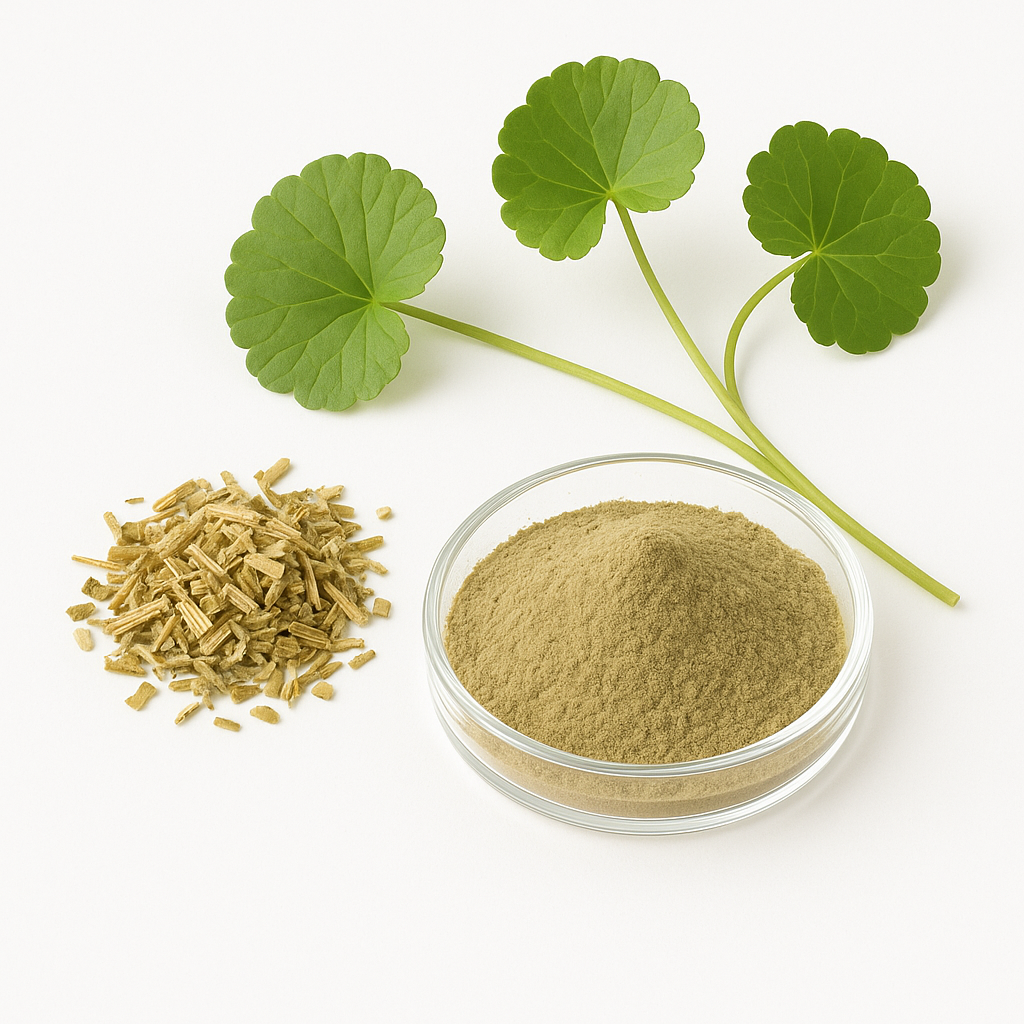
Gotu Kola (Centella asiatica) is a perennial herb native to the wetlands of Asia, commonly known as Indian pennywort or mandukparni. It has been a staple in traditional Ayurvedic, African, and Chinese medicine for thousands of years, historically used for wound healing, improving memory, and treating various skin conditions and nervous disorders [1]. It is often referred to as the “herb of longevity.”
Botanical Basics
- Botanical Name: Centella asiatica (L.) Urb.
- Family: Apiaceae (formerly Umbelliferae)
- Common Names: Indian Pennywort, Mandukparni, Jalbrahmi
Mechanism of Action
The primary therapeutic actions of Centella asiatica are attributed to its triterpenoid saponins, collectively known as centelloids.
- Connective Tissue Modulation: The centelloids, particularly asiaticoside and madecassoside, are known to stimulate the synthesis of collagen (Type I and III) and other structural proteins like fibronectin, which is fundamental to its wound-healing and anti-aging properties [1]. They also help stabilize connective tissue, which is beneficial for conditions like chronic venous insufficiency [1, 3].
- Central Nervous System (CNS) Effects: The herb’s nootropic and anxiolytic effects are partially linked to its ability to modulate neurotransmitter systems. Studies suggest that certain constituents, such as brahmoside and brahminoside, may be responsible for CNS actions, including the potential to increase cerebral levels of GABA (Gamma-Aminobutyric Acid) and bind to cholecystokinin (CCKB) receptors, which are involved in anxiety, memory, and nociception [1].
- Anti-inflammatory and Antioxidant Effects: C. asiatica extracts exhibit anti-inflammatory activity by inhibiting the production of nitric oxide (NO) and possess significant antioxidant properties, which help protect against oxidative stress and cellular damage [1].
2. Chemical Composition/Key Bioactive Roles
The most important active compounds in Centella asiatica are the pentacyclic triterpenoid saponins (centelloids) and their corresponding aglycones.
| Compound | Type | Key Bioactive Role |
|---|---|---|
| Asiaticoside | Triterpenoid Saponin | Promotes collagen synthesis and angiogenesis, crucial for wound healing and skin repair [1]. |
| Madecassoside | Triterpenoid Saponin | Anti-inflammatory and antioxidant properties; supports wound healing and skin health [1]. |
| Asiatic Acid | Triterpenoid Aglycone | Stimulates Type I collagen synthesis; possesses anti-inflammatory, antioxidant, and neuroprotective effects [1]. |
| Madecassic Acid | Triterpenoid Aglycone | Potent anti-inflammatory and antioxidant agent; supports skin repair and connective tissue health [1]. |
| Brahmoside & Brahminoside | Saponins | Postulated to be responsible for CNS and uterorelaxant actions [1]. |
3. Health Benefits
Centella asiatica has been researched for a wide range of therapeutic applications, with the strongest evidence supporting its use in wound healing and venous health.
Wound Healing and Dermatological Conditions
C. asiatica extracts (CAE) have been used traditionally and are supported by research for their ability to accelerate wound healing. The constituent asiaticoside has been shown to increase collagen formation and the tensile strength of newly formed skin in animal models [1]. Clinical studies and human cell culture experiments confirm that the triterpenoid fraction influences collagen synthesis, which is beneficial for reducing scarring and improving the maturation of scar tissue [1].
Chronic Venous Insufficiency (CVI)
The herb is effective in treating CVI and venous hypertensive microangiopathy. Clinical trials using a titrated extract of C. asiatica (TECA), standardized to its triterpenic fraction, have shown significant improvements in microcirculatory parameters, including a decrease in capillary filtration rate and a reduction in ankle edema [1, 3]. In one study, patients receiving 90 mg of the triterpenic fraction daily showed a statistically significant decrease in circulating endothelial cells, indicating a protective effect on vascular integrity [1].
Cognitive Function and Anxiety
C. asiatica has been traditionally used as a nervine tonic. A randomized, placebo-controlled, double-blind study involving elderly participants found that a dose of 750 mg daily of C. asiatica extract led to the greatest improvements in mood and cognitive function after two months [1]. Another double-blind, placebo-controlled study suggested that C. asiatica possesses anxiolytic activity in humans [1]. Preclinical studies also suggest potential antidepressant and antiepileptic properties [1].
4. Dosage and Usage
Dosage recommendations vary significantly based on the preparation (dried herb, standardized extract, or specific triterpenoid fraction) and the condition being treated.
| Condition | Recommended Dosage | Preparation Type | Source |
|---|---|---|---|
| Chronic Venous Insufficiency | 60 mg to 120 mg per day | Standardized triterpenic fraction (e.g., TECA) in 2-3 divided doses | [1, 3] |
| Cognitive Function/Mood | 750 mg per day | Standardized extract | [1] |
| General Supplementation | 300 mg to 680 mg, three times daily | Single-dose capsules of dried leaf/extract | [1] |
| Traditional Tea | 5-10 g of dried leaf, steeped in 150 ml of boiling water, 3 times per day | Dried leaves | [1] |
Note: The standardized C. asiatica extracts used in modern herbal medicine often contain up to 100% total saponins (triterpenoids), and a dosage of 60 mg once or twice per day is frequently used [1].
5. Safety and Precautions
Gotu Kola is generally considered safe when taken at recommended doses, but certain precautions must be observed.
Side Effects
Side effects are rare but may include [1]:
- Skin allergy or burning sensations (with external use).
- Gastrointestinal issues such as stomach upset and nausea.
- Neurological effects such as headache, dizziness, and extreme drowsiness, which are more likely with high doses.
Contraindications and Warnings
- Liver Health: Centella asiatica has been linked to rare instances of clinically apparent acute liver injury with jaundice. Individuals with pre-existing liver conditions should use it with caution and under medical supervision [2].
- Pregnancy and Breastfeeding: Chronic treatment with high doses is postulated to cause spontaneous abortion in animal models; therefore, it is generally advised that pregnant and nursing mothers refrain from taking this herb due to limited safety information [1].
- Duration of Use: The use of C. asiatica for more than 6 weeks is not recommended in the literature. For prolonged use, a 2-week break is suggested after every 6-week period [1].
- Heavy Metals: There is a risk of heavy metal contamination (e.g., lead, arsenic) due to the plant’s ability to absorb metals from contaminated soil where it is grown [4]. Sourcing from reputable suppliers who test for contaminants is crucial.
Drug Interactions
There are no widely documented negative interactions with prescription medications. However, due to its known effects, theoretical interactions are possible [1]:
- Sedative Medications: Since high doses can cause sedation, C. asiatica should be used with caution alongside medications that promote sleep or reduce anxiety, as it may potentiate their effects [1].
- Hypoglycemic and Cholesterol-Lowering Agents: Theoretically, C. asiatica may interfere with blood glucose levels and cholesterol-lowering therapies, though this requires further clinical confirmation [1].
6. References
- Gohil, K. J., Patel, J. A., & Gajjar, A. K. (2010). Pharmacological Review on Centella asiatica: A Potential Herbal Cure-all. Indian Journal of Pharmaceutical Sciences, 72(5), 546–556. https://pmc.ncbi.nlm.nih.gov/articles/PMC3116297/
- LiverTox: Clinical and Research Information on Drug-Induced Liver Injury. (2024). Centella asiatica. National Institute of Diabetes and Digestive and Kidney Diseases (NIDDK). https://www.ncbi.nlm.nih.gov/books/NBK603561/
- Cesarone, M. R., Belcaro, G., Rulo, A., Pomante, P., Cacchio, M., Di Renzo, A., … & Dugall, M. (2019). Activity of Centella asiatica on venous insufficiency. Angiology, 70(10), 967-975. https://journals.sagepub.com/doi/abs/10.1177/0003319719857991
- Healthline. (2017). Gotu Kola: 10 Benefits, Side Effects, and More. https://www.healthline.com/health/gotu-kola-benefits
Category: Herb
