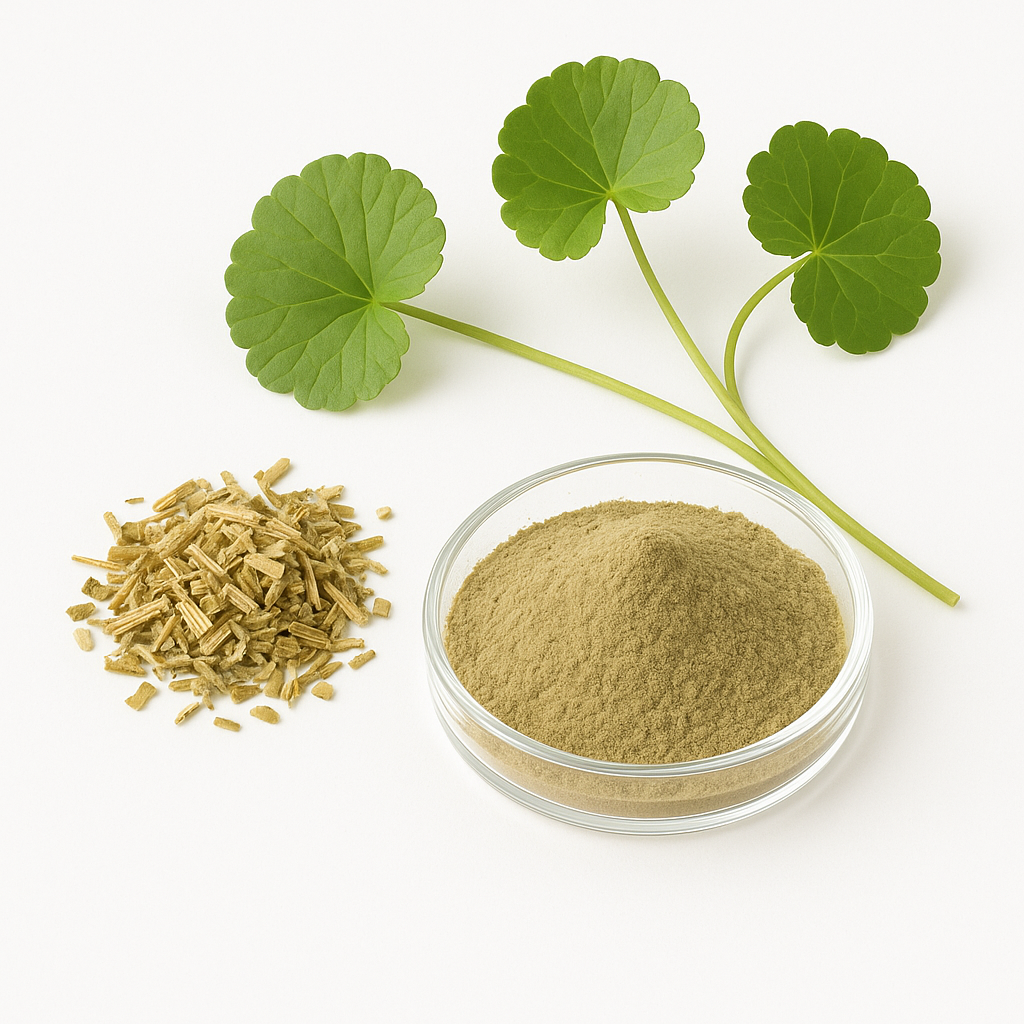
Maca (Lepidium meyenii)
Maca (Lepidium meyenii) is a biennial herbaceous plant belonging to the Brassicaceae family, native to the high Andean regions of Peru and Bolivia. It has a rich history of traditional use by the indigenous population for its purported health benefits, serving as both a food source and a medicinal herb [1].
Botanical Basics
Maca is cultivated at altitudes typically between 4,000 and 4,500 meters above sea level, making it one of the highest-growing food crops. The part of the plant used is the hypocotyl, often referred to as the root or tuber, which is typically dried and consumed as a powder or extract [1].
Mechanism of Action
The pharmacological effects of Maca are attributed to a complex, synergistic interaction of its unique bioactive metabolites, rather than a single compound. Its proposed mechanisms of action include:
- Adaptogenic Effects: Maca is considered an adaptogen, helping the body resist physical, chemical, and biological stressors, potentially through the modulation of the Hypothalamus-Pituitary-Adrenal (HPA) axis [1, 2].
- Endocannabinoid System Modulation: Macamides, which are structurally similar to the endocannabinoid anandamide, may act on the nervous system by inhibiting the degradation of endocannabinoids, thereby exhibiting neuroprotective and mood-regulating effects [1].
- Antioxidant and Anti-inflammatory Activity: Maca compounds, including macamides and glucosinolates, possess antioxidant properties, helping to maintain a balanced redox state and reduce levels of pro-inflammatory cytokines [1].
- Non-Hormonal Action: While traditionally associated with fertility, Maca’s effects on sexual health are often independent of changes in serum testosterone and estradiol levels, suggesting a non-hormonal mechanism [3].
2. Chemical Composition/Key Bioactive Roles
Maca’s chemical profile is diverse, with its main bioactive components being unique fatty acid amides (macamides), sulfur-containing compounds (glucosinolates), and long-chain unsaturated fatty acids (macaenes) [1].
| Compound Group | Key Components | Bioactive Role |
|---|---|---|
| Macamides | N-benzylalcamides (e.g., N-benzyl-linoleamide) | Characteristic marker for quality; Modulate the endocannabinoid system; Neuroprotective, antioxidant |
| Glucosinolates | Glucotropaeolin (Benzyl glucosinolate) | Metabolized into isothiocyanates; Chemoprotective, antioxidant, antifungal |
| Macaenes | Long-chain unsaturated fatty acids | Precursors to macamides; May influence lipid metabolism via PPAR agonists |
| Nutritional | Protein (13-16%), Fiber (8.2%), Carbohydrates (59%) | General nutritional support; Source of essential amino acids and minerals (Iron, Copper, Zinc, Potassium) |
3. Health Benefits
Scientific evidence suggests Maca may be beneficial for several conditions, primarily focusing on sexual health, menopausal symptoms, and physical performance.
Sexual Function and Libido
Clinical studies, primarily in men, indicate that Maca can significantly improve sexual desire (libido) [1, 3].
- Evidence: A randomized, placebo-controlled study found that men receiving 1.5 g or 3 g of gelatinized Maca per day for 12 weeks experienced an increase in sexual desire starting at 8 weeks, independent of changes in testosterone or estradiol levels [3].
- Erectile Dysfunction: Maca powder (2.4 g/day for 12 weeks) has been shown to have positive effects on subjective sexual well-being and erectile function in men with mild erectile dysfunction [1].
Menopausal Symptoms
Maca shows promise in alleviating menopausal discomfort in women, particularly psychological symptoms [1].
- Evidence: Multiple studies on postmenopausal women, using 2-3.5 g/day of gelatinized Maca or Maca powder, reported a decrease in the severity of menopausal symptoms, including a reduction in psychological symptoms, anxiety, depression, and sexual dysfunction [1, 4]. Some studies also noted a decrease in hot flashes and disrupted sleep patterns [1].
Physical Performance and Energy
Maca has been shown to enhance physical performance and reduce fatigue [1].
- Evidence: A study on male athletes who received 1.5 g/day of micropulverized fresh Maca for 60 days reported an increase in physical performance by 10.3% [1]. Another crossover trial using 2 g/day of Maca extract for 14 days showed an improvement in endurance exercise performance, evidenced by a decrease in the time required to complete a 40 km cycling time trial [5].
4. Dosage and Usage
Recommended Dosages
The dosage of Maca used in scientific studies typically ranges from 1.5 grams to 3 grams per day of the powdered root or extract [1, 6].
- General Use/Libido: 1.5 g to 3 g of Maca powder daily, often divided into two doses [3, 6].
- Menopausal Symptoms: 2 g to 3.5 g of gelatinized Maca or Maca powder daily [1, 4].
- Physical Performance: 1.5 g to 2 g of Maca extract or powder daily [1, 5].
Note: The form of Maca (raw powder, gelatinized, or extract) can affect the concentration of bioactive compounds. Gelatinized Maca is pre-cooked to remove starch, which may improve digestibility [1].
Food Sources
Maca is not typically found in common food sources outside of the Andean region. It is consumed as a dried root or powder. Traditional preparations include boiling the dried root to make a sweet beverage or pudding [1].
5. Safety and Precautions
Maca is generally considered safe with a low level of toxicity and good human tolerance, particularly when consumed in traditional forms [1]. However, some precautions and side effects have been noted.
Side Effects
- Common: Mild and transient gastrointestinal upset, headache, and irritability have been reported in some clinical trials [1].
- Rare: One case report noted vaginal bleeding in a young woman, and another reported a manic episode in a man with no prior psychiatric history, though a direct causal link is not definitively established [1].
Contraindications and Warnings
- Hormone-Sensitive Conditions: Due to its potential to modulate hormonal axes (e.g., estrogen-like effects in some preclinical models), Maca is generally not recommended for individuals with hormone-sensitive conditions such as breast, uterine, or ovarian cancer, or endometriosis [7].
- Pregnancy and Breastfeeding: There is insufficient reliable information to know if Maca is safe to use during pregnancy or breastfeeding. It is best to avoid use [7].
- Thyroid Issues: Maca contains glucosinolates, which, in high amounts, can potentially interfere with thyroid function, especially in individuals with existing thyroid conditions or iodine deficiency. Cooking Maca (gelatinization) can reduce the glucosinolate content [7].
Drug Interactions
- Blood Thinners: Maca may interfere with blood-thinning medications (anticoagulants) due to its potential antithrombotic properties, though clinical evidence is limited [1, 7].
- Hormone Therapy: Maca may interfere with hormone replacement therapy or medications that affect hormone levels [7].
- CYP450 Enzymes: Some Maca compounds may interact with Cytochrome P450 enzymes, which are involved in metabolizing many drugs. This could potentially alter the effectiveness or side effects of medications [1].
6. References
- Ulloa del Carpio, N., et al. (2024). Exploring the chemical and pharmacological variability of Lepidium meyenii: a comprehensive review of the effects of maca. Frontiers in Pharmacology, 15. https://pmc.ncbi.nlm.nih.gov/articles/PMC10910417/
- Todorova, V., et al. (2021). Maca (Lepidium meyenii Walp.)—A Review of its Traditional Uses, Phytochemistry, and Pharmacology. Frontiers in Pharmacology, 12. https://www.frontiersin.org/articles/10.3389/fphar.2021.643950/full
- Gonzales, G. F., et al. (2002). Effect of Lepidium meyenii (Maca) on sexual desire and its absent relationship with serum testosterone levels in adult healthy men. Andrologia, 34(6), 367-372. https://pubmed.ncbi.nlm.nih.gov/12472620/
- Brooks, N. A., et al. (2008). Beneficial effects of Lepidium meyenii (Maca) on psychological symptoms and measures of sexual dysfunction in postmenopausal women are not related to estrogen or androgen levels. Menopause, 15(6), 1157–1162. https://pubmed.ncbi.nlm.nih.gov/18784609/
- Stone, M., et al. (2009). A pilot investigation into the effect of maca supplementation on physical activity and sexual desire in male athletes. Journal of Ethnopharmacology, 126(3), 574-576. https://pubmed.ncbi.nlm.nih.gov/19781622/
- Dording, C. M., et al. (2008). A double-blind, randomized, pilot dose-finding study of maca root (L. meyenii) for the management of SSRI-induced sexual dysfunction. CNS Neuroscience & Therapeutics, 14(3), 182-191. https://pubmed.ncbi.nlm.nih.gov/18801111/
- WebMD. (2025). Maca: Benefits, Side Effects, Safety Tips, Dosage, and More. https://www.webmd.com/diet/health-benefits-maca