
Beta-glucans
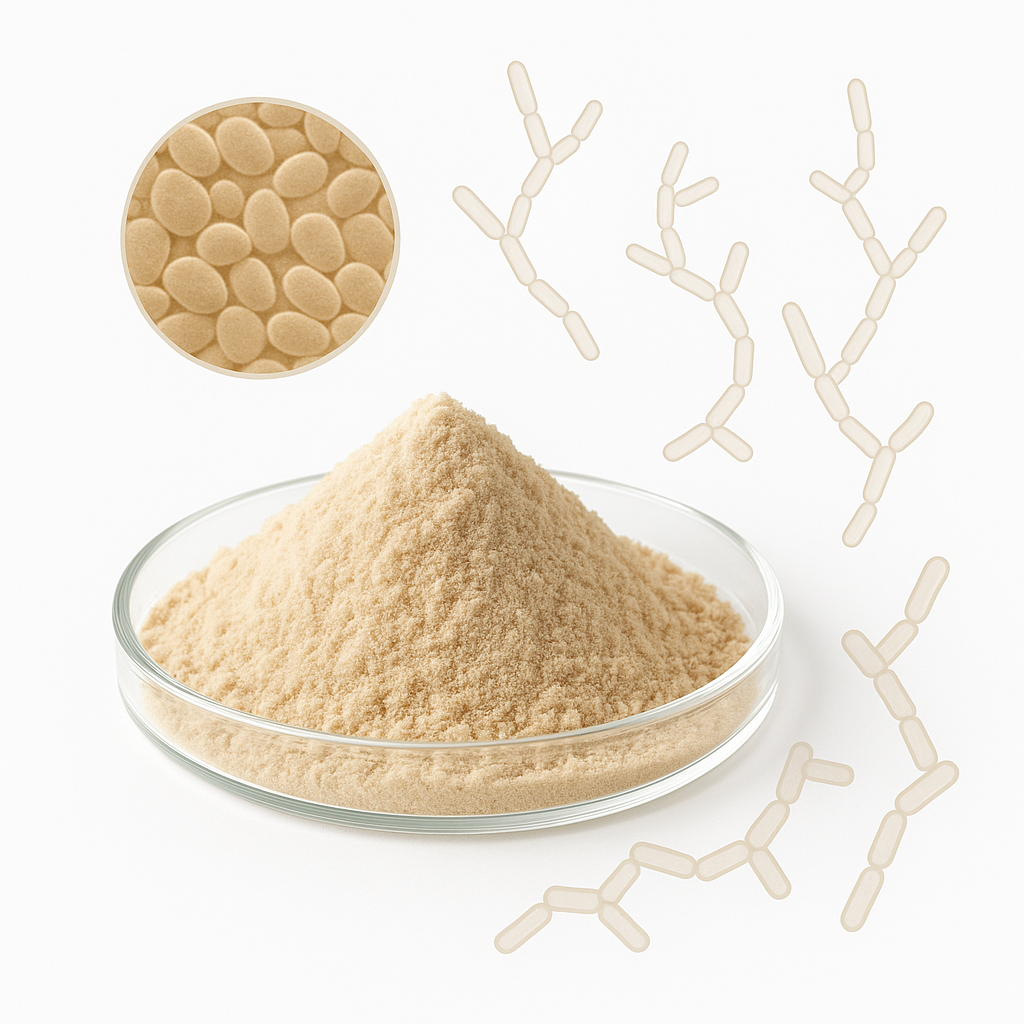
Beta-glucans are naturally occurring polysaccharides, a type of soluble fiber, found in the cell walls of various organisms, including yeast, oats, barley, mushrooms, and algae. The structure and biological activity of beta-glucans vary significantly depending on their source. Yeast beta-glucans (YBG), specifically derived from the cell walls of Saccharomyces cerevisiae (baker’s yeast), are primarily composed of a $beta$-(1$rightarrow$3)-D-glucan backbone with $beta$-(1$rightarrow$6)-D-glucan side chains [1]. This specific structure is what confers its potent biological activity, particularly in immunomodulation.
Mechanism of Action
Yeast beta-glucans are not broken down by human digestive enzymes. Instead, they are recognized by immune cells in the Peyer’s patches of the small intestine. The primary mechanism of action involves binding to specific pattern recognition receptors on immune cells, such as macrophages, neutrophils, and natural killer (NK) cells. Key receptors include:
- Dectin-1 (C-type lectin receptor): The main receptor that recognizes the $beta$-(1$rightarrow$3) backbone [2].
- Complement Receptor 3 (CR3 or CD11b/CD18): Involved in the anti-tumor and anti-infective activity of YBG [2].
- Toll-like Receptors (TLR-2/6): Also play a role in the immune response [2].
This binding process activates the immune cells, stimulating the host’s non-specific defense mechanisms and inducing a state known as trained immunity. Trained immunity is a long-term functional reprogramming of innate immune cells, leading to an enhanced response to subsequent infections [3].
2. Chemical Composition and Key Bioactive Roles
The bioactive properties of yeast beta-glucan are directly linked to its unique molecular structure, which is characterized by the $beta$-(1$rightarrow$3) backbone and $beta$-(1$rightarrow$6) branching.
| Component | Chemical Classification | Key Bioactive Role |
|---|---|---|
| Beta-1,3/1,6-D-glucan | Polysaccharide (Dietary Fiber) | Immunomodulation, enhancement of innate immunity, anti-infective activity. |
| Source | Saccharomyces cerevisiae (Baker’s Yeast) | Confers the specific molecular structure required for immune receptor binding. |
3. Health Benefits
Yeast beta-glucans have been widely studied for their effects on the immune system and overall health.
Immune System Enhancement
YBG’s primary benefit is its ability to enhance the immune system, particularly in the context of upper respiratory tract infections (URTIs) and general immune function.
- Reduction of URTI Incidence and Duration: Clinical studies have shown that daily supplementation with yeast beta-glucan can reduce the incidence and duration of common cold symptoms. For example, a meta-analysis found that YBG supplementation significantly reduced the number of cold/flu episodes and improved overall physical health in healthy adults [4].
- Stress-Induced Immunosuppression: YBG has been shown to counteract the negative effects of physical or psychological stress on the immune system. Studies on marathon runners and other high-stress populations indicate that YBG can reduce the incidence of illness episodes post-stress [5].
Gut Health and Microbiota Modulation
Beta-glucans act as a prebiotic, supporting the balance of the gut microbiota, which is intrinsically linked to immune function.
- Prebiotic Effects: As an insoluble fiber, YBG passes to the large intestine where it is fermented by beneficial gut bacteria. This fermentation process produces short-chain fatty acids (SCFAs), such as butyrate, which are vital for maintaining the integrity of the gut barrier and modulating inflammation [6].
Cholesterol Management
While beta-glucans from oats are more commonly associated with cholesterol reduction, yeast beta-glucans may also contribute to cardiovascular health.
- Lipid Profile Improvement: Some research suggests that YBG may help lower total and LDL (“bad”) cholesterol levels, although the effect is often less pronounced than that of oat beta-glucan [7]. This is primarily due to its fiber-like properties, which can bind to cholesterol in the digestive tract.
4. Dosage and Usage
Recommended Dosages
The effective dosage of yeast beta-glucan varies depending on the desired health outcome, but a common range for immune support is in milligrams.
- For Immune Support/URTI Prevention: The most common and scientifically supported dosage is 250 mg to 500 mg per day, taken orally for a duration of at least 4 to 12 weeks [8, 9].
- Lower Dosages: Some studies have demonstrated immunomodulatory effects at dosages as low as 120 mg per day [10].
- Higher Dosages: While generally safe, dosages in the gram range (e.g., 1-3 grams) are sometimes used in specific clinical settings or for general fiber intake, but the immune-specific benefit is often achieved at the lower milligram range.
Food Sources
Yeast beta-glucans are not naturally found in common dietary foods other than yeast-containing products. The primary dietary sources of beta-glucans are oats, barley, mushrooms (e.g., Shiitake, Reishi), and certain algae. For therapeutic immune benefits, supplementation is typically necessary to achieve the standardized, concentrated dose of the yeast-derived $beta$-(1$rightarrow$3)/(1$rightarrow$6) structure.
5. Safety and Precautions
Yeast beta-glucans are generally considered safe for most people when taken orally in appropriate doses for up to 12 weeks [11].
Side Effects
Reported side effects are typically mild and related to the high fiber content, especially at higher doses:
- Diarrhea
- Nausea
- Gas and Bloating
- Flatulence
Contraindications and Warnings
- Autoimmune Diseases: Due to its potent immune-stimulating effects, individuals with autoimmune diseases (such as lupus, rheumatoid arthritis, or multiple sclerosis) should use YBG with caution and consult a healthcare professional, as it may theoretically exacerbate their condition [12].
- Organ Transplant Recipients: YBG should be avoided by individuals who have received an organ transplant or are taking immunosuppressant medications, as its immune-boosting properties could interfere with the necessary suppression of the immune system [12].
- Allergy: Individuals with a known allergy to yeast should avoid yeast beta-glucan products.
Drug Interactions
- Immunosuppressants: YBG may interfere with the action of immunosuppressive drugs (e.g., cyclosporine, azathioprine) by stimulating the immune system. This interaction is considered serious [12].
- Indomethacin: There is a theoretical concern that taking beta-glucans with the non-steroidal anti-inflammatory drug (NSAID) indomethacin might increase the risk of life-threatening side effects, though this is based on limited data and requires further study [12].
6. References
[1] Wikipedia. Beta-glucan. [URL: https://en.wikipedia.org/wiki/Beta-glucan] [2] Chan, G. C. F., Chan, W. K., & Sze, D. M. Y. (2009). The effects of $beta$-glucan on human immune and cancer cells. Journal of Hematology & Oncology, 2(1), 25. [URL: https://jhoonline.biomedcentral.com/articles/10.1186/1756-8722-2-25] [3] Abbiotek Health. Trained Immunity: how yeast beta-glucan helps build long-term resilience. [URL: https://www.abbiotekhealth.com/en/blogs/trained-immunity-how-yeast-beta-glucan-helps-build-long-term-resilience/] [4] Auinger, A., Riede, L., Bothe, G., Ekmekcioglu, C., & Ploner, M. (2014). Yeast (1→3), (1→6)-beta-glucan as a dietary supplement: does it enhance immune competence in humans? A systematic review of randomized controlled trials. European Journal of Nutrition, 53(1), 1-13. [URL: https://link.springer.com/article/10.1007/s00394-013-0576-9] [5] Talbott, S., & Talbott, J. (2012). Beta-Glucan Supplementation, Allergy Symptoms, and Running Performance in Self-Described Ragweed Sufferers. Journal of Sports Science and Medicine, 11(2), 295–300. [URL: https://www.jssm.org/jssm-11-295.xml%3Ffulltext] [6] Edo, G. I., et al. (2025). A critical review on the impacts of $beta$-glucans on gut health. Current Research in Food Science, 8, 100650. [URL: https://www.sciencedirect.com/science/article/pii/S2950194625001621] [7] Nicolosi, R., et al. (1999). Dietary $beta$-glucan from oats and yeast favorably modulates serum cholesterol and $alpha$-tocopherol in hypercholesterolemic men. The American Journal of Clinical Nutrition, 70(2), 208-212. [URL: https://academic.oup.com/ajcn/article-abstract/70/2/208/4714881] [8] Examine.com. Beta-glucans benefits, dosage, and side effects. [URL: https://examine.com/supplements/beta-glucans/] [9] WebMD. Beta-Glucans – Uses, Side Effects, and More. [URL: https://www.webmd.com/vitamins/ai/ingredientmono-1041/beta-glucans] [10] Habibullah, N. N. M., et al. (2025). Efficacy of yeast beta-glucan 1,3/1,6 supplementation on immunomodulatory markers in moderate-stress adults. Frontiers in Nutrition, 12, 11749537. [URL: https://pmc.ncbi.nlm.nih.gov/articles/PMC11749537/] [11] EFSA Panel on Dietetic Products, Nutrition and Allergies (NDA). (2011). Scientific Opinion on the safety of ‘yeast beta-glucans’ as a novel food ingredient. EFSA Journal, 9(5), 2137. [URL: https://efsa.onlinelibrary.wiley.com/doi/abs/10.2903/j.efsa.2011.2137] [12] RxList. Beta-glucans: Health Benefits, Side Effects, Uses, Dose & Interactions. [URL: https://www.rxlist.com/supplements/beta-glucans.htm]Category: Polysaccharide
