
Sacha Inchi
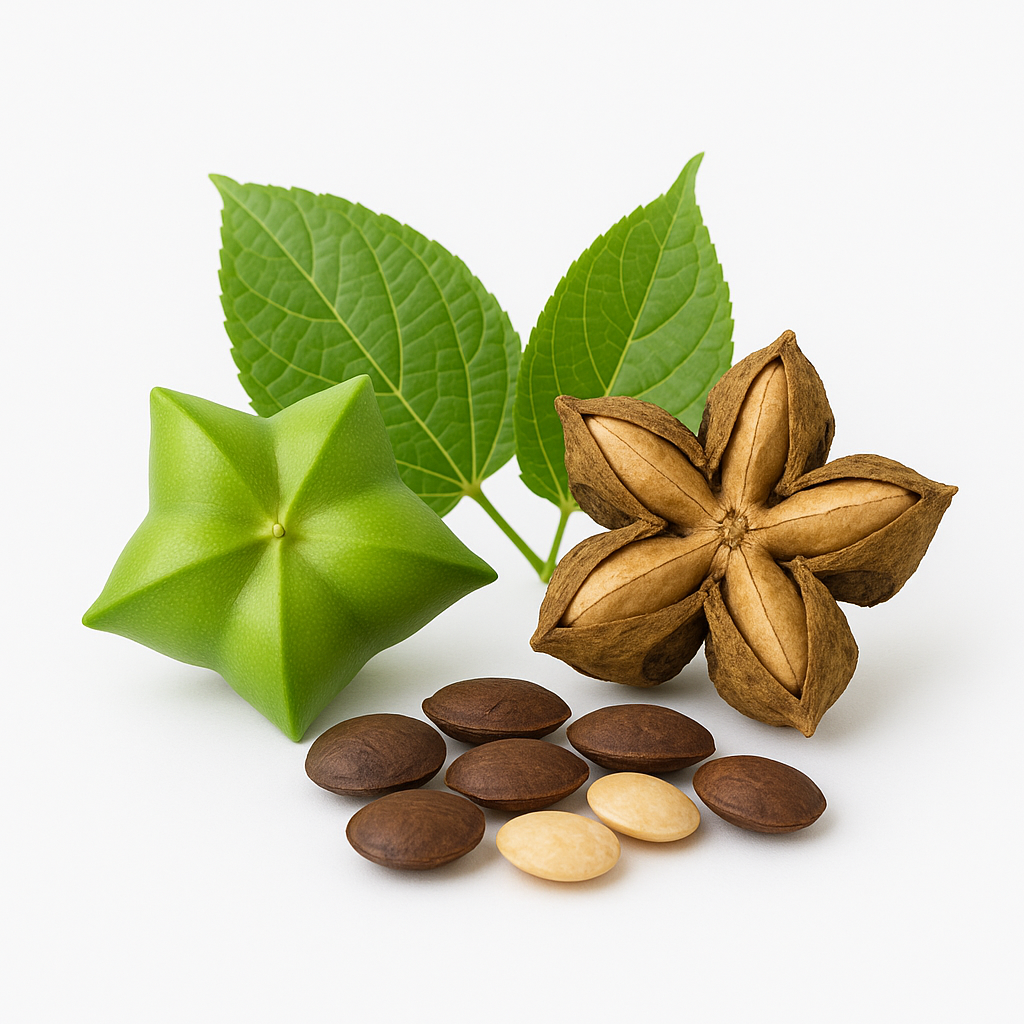
What is the product?
Sacha Inchi (Plukenetia volubilis Linneo), also known as Inca Peanut, is a perennial plant native to the Peruvian Amazon rainforest. It is an ancestral crop that has been cultivated for centuries by indigenous communities for its highly nutritious seeds. The seeds are primarily consumed in the form of roasted seeds or cold-pressed oil, which is valued for its exceptional fatty acid profile.
Botanical Basics
- Scientific Name: Plukenetia volubilis Linneo
- Family: Euphorbiaceae
- Origin: Amazon rainforest, particularly Peru
- Edible Part: The star-shaped seed pods contain seeds that are processed into oil or consumed whole after roasting.
Mechanism of Action
The primary mechanism of action is attributed to the exceptionally high concentration of polyunsaturated fatty acids (PUFAs), particularly the $omega$-3 fatty acid Alpha-Linolenic Acid (ALA).
- Cardiovascular Health: ALA is a precursor to the longer-chain $omega$-3 fatty acids, eicosapentaenoic acid (EPA) and docosahexaenoic acid (DHA). The consumption of ALA contributes to the maintenance of normal blood cholesterol levels. Its high PUFA content is associated with antiatherogenic, antithrombogenic, and hypocholesterolemic effects [1, 2].
- Anti-inflammatory and Antioxidant Activity: The presence of tocopherols (Vitamin E), phenols, and flavonoids provides significant antioxidant activity, which helps to neutralize free radicals and reduce oxidative stress. This, combined with the anti-inflammatory properties of $omega$-3 fatty acids, contributes to its potential in managing chronic inflammatory conditions [1].
- Metabolic Regulation: Sacha Inchi has been shown to positively influence lipid profiles and may play a role in the attenuation of metabolic disorders such as dyslipidemia, obesity, and diabetes, likely through its effect on lipid metabolism and insulin sensitivity [3].
2. Chemical Composition/Key Bioactive Roles
Sacha Inchi seeds and oil are a rich source of essential fatty acids, protein, and micronutrients. The oil is particularly noted for its favorable $omega$-6 to $omega$-3 ratio, which is close to the ideal dietary ratio.
| Compound | Source | Concentration (in Oil) | Key Bioactive Role |
|---|---|---|---|
| Alpha-Linolenic Acid (ALA) ($omega$-3) | Oil | 47–51% [1] | Essential fatty acid, precursor to EPA/DHA, anti-inflammatory, hypocholesterolemic. |
| Linoleic Acid (LA) ($omega$-6) | Oil | 34–37% [1] | Essential fatty acid, important for skin barrier function and immune regulation. |
| Protein | Seeds | 25–33% [2] | Provides essential amino acids (e.g., cysteine, tyrosine), structural and enzymatic functions. |
| Tocopherols ($alpha$- and $delta$-) | Oil | 50–125 mg/g [1] | Vitamin E activity, powerful lipid-soluble antioxidant, protects against oxidative stress. |
| Phenolic Compounds | Seeds/Leaves | Varies | Antioxidant and anti-inflammatory properties. |
| Phytosterols | Oil | Varies | Cholesterol-lowering effects (e.g., $beta$-sitosterol, campesterol). |
3. Health Benefits
The health benefits of Sacha Inchi are primarily linked to its high $omega$-3 content and antioxidant profile, supported by clinical and preclinical studies.
Cardiovascular Health and Dyslipidemia
Consumption of Sacha Inchi oil has been consistently shown to improve lipid profiles in humans. A randomized, double-blind, placebo-controlled study demonstrated that daily intake of Sacha Inchi oil (10–15 mL) for four months significantly reduced total cholesterol, LDL-C, and increased HDL-C compared to a control group [4]. The effect is attributed to the high ALA content, which helps regulate lipid metabolism.
Blood Pressure Regulation
A small study in 30 participants indicated that taking 10–15 mL of Sacha Inchi oil daily for 4 months led to improved blood pressure [4]. This effect is likely secondary to the oil’s anti-inflammatory and vascular-health-promoting properties.
Anti-inflammatory Effects
The favorable $omega$-6/$omega$-3 ratio (approximately 1:1.25) is crucial for modulating the inflammatory response. The high $omega$-3 content helps shift the body’s eicosanoid production toward less inflammatory mediators, contributing to its potential in managing inflammatory conditions [1, 3].
Antioxidant Protection
The high levels of tocopherols and phenolic compounds provide strong antioxidant protection. This helps protect cellular components, including lipids and DNA, from damage caused by free radicals and oxidative stress, which is a key factor in the pathogenesis of many chronic diseases [1].
4. Dosage and Usage
Sacha Inchi is consumed as oil or as roasted seeds. Dosage recommendations are based on human clinical trials and traditional use.
Recommended Dosages
- Sacha Inchi Oil: The most common dosage used in human trials is 10 to 15 mL per day (approximately 2–3 teaspoons) [4, 5]. This dosage has been shown to be well-accepted and effective in improving lipid profiles.
- Sacha Inchi Seeds (Roasted): An intake of approximately 30 grams per day of roasted seeds has been reported to improve lipid profiles and is well-tolerated [5].
Food Sources
Sacha Inchi is primarily a food source. The seeds can be eaten roasted, similar to peanuts or almonds. The oil has a mild, slightly nutty flavor and is best used in cold preparations such as salad dressings, dips, or drizzled over finished meals, as heating can degrade the beneficial $omega$-3 fatty acids.
5. Safety and Precautions
Sacha Inchi is generally considered safe for human consumption, especially the oil and roasted seeds. Most reported side effects are mild and transient.
Side Effects
The most frequent adverse effects reported during the initial weeks of consuming Sacha Inchi oil are nausea and mild gastrointestinal discomfort (e.g., bloating or gas) [4, 5]. These side effects are typically mild and tend to decrease over time with continued use as the body adjusts [4].
Contraindications and Drug Interactions
- Contraindications: There are no known absolute contraindications for Sacha Inchi consumption at typical dietary or supplemental doses.
- Drug Interactions: Due to its potential to improve lipid profiles and possibly affect blood pressure, caution should be exercised in individuals taking antihyperlipidemic (cholesterol-lowering) medications or antihypertensive (blood pressure-lowering) medications. Consultation with a healthcare provider is recommended to monitor for potential additive effects.
Warnings
- Unroasted Seeds: Raw (unroasted) Sacha Inchi seeds should not be consumed as they contain certain anti-nutritional factors and potentially toxic compounds that are deactivated by roasting or heat treatment. Always ensure seeds are properly processed (e.g., roasted or pressed for oil) before consumption.
- Allergy: As a seed product, individuals with known allergies to other nuts or seeds should introduce Sacha Inchi cautiously.
6. References
- Cárdenas, D. M., Gómez Rave, L. J., & Soto, J. A. (2021). Biological Activity of Sacha Inchi (Plukenetia volubilis Linneo) and Potential Uses in Human Health: A Review. Food Technology and Biotechnology, 59(3), 253–266. https://pmc.ncbi.nlm.nih.gov/articles/PMC8542186/
- Wang, S., Zhu, F., & Kakuda, Y. (2018). Sacha inchi (Plukenetia volubilis L.): Nutritional composition, biological activity, and uses. Food Chemistry, 265, 316–328. https://doi.org/10.1016/j.foodchem.2018.05.055
- Abd Rahman, I. Z., et al. (2023). Evaluating the Potential of Plukenetia volubilis Linneo (Sacha Inchi) in Attenuating Dyslipidemia, Obesity, Diabetes, and Hypertension: A Systematic Review. Nutrients, 15(23), 4983. https://pmc.ncbi.nlm.nih.gov/articles/PMC10675584/
- Gonzales, G. F., et al. (2014). A randomized, double-blind placebo-controlled study on the effect of sacha inchi (Plukenetia volubilis L.) oil on the lipid profile and blood pressure in patients with hypercholesterolemia. Food and Chemical Toxicology, 65, 111–118. https://pubmed.ncbi.nlm.nih.gov/24389453/
- Rodzi, N. A. R. M., et al. (2025). Effects of Sacha Inchi (Plukenetia volubilis L.) Oil Supplementation on Lipid Profile, Liver and Kidney Function in Healthy Adults: A Randomized Controlled Trial. Biological Trace Element Research. https://link.springer.com/article/10.1007/s11130-025-01309-8
Category: oilseed
