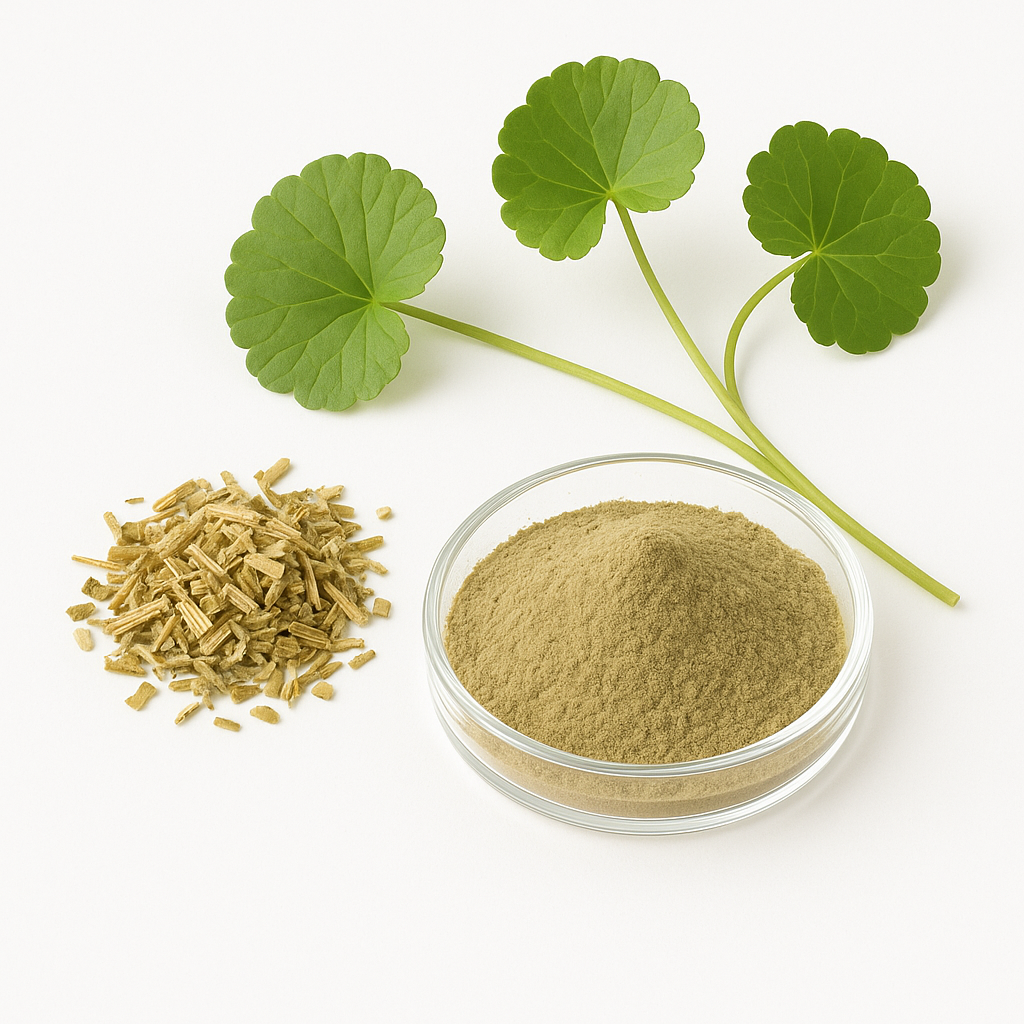
Ginger (Zingiber officinale)
Ginger, derived from the rhizome of the plant Zingiber officinale, is a widely consumed spice and traditional herbal medicine belonging to the family Zingiberaceae. It has been used for thousands of years in various cultures, including Traditional Chinese Medicine and Ayurveda, to treat a range of ailments such as headaches, colds, and, most notably, nausea and emesis [1].
Chemical/Botanical Basics
The medicinal and biological activities of ginger are primarily attributed to its high content of phenolic and terpene compounds. The fresh rhizome is rich in gingerols, which are the main pungent compounds. Upon drying or heating, gingerols are converted into their corresponding, more pungent shogaols [2].
Mechanism of Action
Ginger’s diverse therapeutic effects are mediated through several complex molecular pathways:
- Anti-inflammatory Action: Bioactive compounds like 6-gingerol and 6-shogaol exert potent anti-inflammatory effects by inhibiting the production of pro-inflammatory mediators. This is largely achieved through the suppression of the Nuclear Factor-kappa B (NF-κB) signaling pathway and the inhibition of enzymes like cyclooxygenase-2 (COX-2) and lipoxygenase (LOX), which are central to the inflammatory cascade [1, 3].
- Antioxidant Action: Ginger exhibits strong antioxidant activity, primarily by activating the Nuclear Factor Erythroid 2-Related Factor 2 (Nrf2) signaling pathway. This activation leads to the upregulation of numerous endogenous antioxidant and phase II detoxification enzymes, such as heme oxygenase-1 (HO-1), which helps to neutralize reactive oxygen species (ROS) and reduce oxidative stress [2].
- Antiemetic Action: The anti-nausea effects are thought to be related to ginger’s ability to act as a prokinetic agent, enhancing gastrointestinal motility and tone. It may also act centrally by blocking serotonin receptors in the gut and central nervous system that trigger the vomiting reflex [4].
2. Chemical Composition/Key Bioactive Roles
The nonvolatile pungent components are the most significant bioactive compounds in ginger. The composition varies depending on the form (fresh, dried, or heated).
| Compound Class | Key Bioactive Compounds | Role/Primary Activity |
|---|---|---|
| Gingerols | 6-Gingerol, 8-Gingerol, 10-Gingerol | Main pungent compounds in fresh ginger; Anti-inflammatory, Antioxidant, Antiemetic [2] |
| Shogaols | 6-Shogaol, 8-Shogaol, 10-Shogaol | Formed from gingerols upon drying/heating; More potent Antioxidant and Anticancer activity [2] |
| Paradols | 6-Paradol | Formed from shogaols via hydrogenation; Pungent, Analgesic, and Antioxidant properties [2] |
| Volatile Oils | Zingiberene, $beta$-Bisabolene, Curcumene | Responsible for the characteristic aroma; Essential oil components [2] |
3. Health Benefits
Ginger’s health benefits are supported by a substantial body of scientific evidence, particularly in the areas of nausea, inflammation, and pain management.
Antiemetic Effects (Nausea and Vomiting)
Ginger is a well-established remedy for various forms of nausea. Clinical studies have shown its efficacy in:
- Pregnancy-related Nausea and Vomiting (Morning Sickness): A systematic review and meta-analysis confirmed that ginger is an effective and safe treatment for nausea and vomiting during pregnancy [5].
- Chemotherapy-Induced Nausea and Vomiting (CINV): Ginger has been shown to be a helpful adjunct to standard antiemetic treatments, particularly for delayed CINV [6].
Anti-inflammatory and Analgesic Effects
The anti-inflammatory properties of gingerols and shogaols make ginger effective for pain and inflammation:
- Osteoarthritis (OA): Ginger supplementation has been shown to significantly reduce pain and disability in patients with knee osteoarthritis [7]. The mechanism is linked to the inhibition of COX-2 and other inflammatory pathways [3].
- Primary Dysmenorrhea (Menstrual Pain): Multiple randomized controlled trials (RCTs) have demonstrated that ginger can reduce the severity of pain in primary dysmenorrhea, often comparable to non-steroidal anti-inflammatory drugs (NSAIDs) like ibuprofen [8].
Metabolic and Cardiovascular Benefits
Ginger may also offer benefits for metabolic health:
- Blood Sugar Control: Ginger supplementation has been shown to significantly reduce fasting blood glucose, HbA1c, and insulin resistance in patients with type 2 diabetes [9].
- Lipid Profile: Studies suggest ginger can help lower serum total cholesterol, triglycerides, and LDL cholesterol, contributing to cardiovascular protection [1].
4. Dosage and Usage
The effective dosage of ginger varies depending on the condition being treated and the form of the supplement. It is important to note that most clinical studies use powdered ginger rhizome encapsulated in capsules.
| Condition | Recommended Daily Dosage | Notes |
|---|---|---|
| General Anti-Nausea | 1,000 mg (1 g) to 1,500 mg (1.5 g) of dried powdered ginger, divided into 2-4 doses [4, 6] | Often used for motion sickness or general stomach upset. |
| Pregnancy Nausea | 1,000 mg (1 g) of dried powdered ginger, divided into 2-4 doses [5] | Should be discussed with a healthcare provider. |
| Osteoarthritis | 1,000 mg (1 g) to 2,000 mg (2 g) of dried powdered ginger [7] | Typically taken daily for several weeks. |
| Primary Dysmenorrhea | 750 mg to 2,000 mg of dried powdered ginger, taken in divided doses on the first 3-4 days of the menstrual cycle [8] | Start taking at the onset of the menstrual period. |
Food Sources: Ginger is consumed as a fresh root, dried powder, or in crystallized form. The fresh root can be grated or sliced and added to teas, juices, and meals.
5. Safety and Precautions
Ginger is generally recognized as safe (GRAS) when consumed in amounts typically found in food. However, at therapeutic supplement doses, certain side effects and precautions apply.
Side Effects
The most common side effects are mild and gastrointestinal in nature:
- Abdominal Discomfort/Upset Stomach
- Heartburn/Reflux
- Diarrhea
- Mouth and Throat Irritation [10]
Contraindications and Warnings
- Gallbladder Disease: Individuals with a history of gallstones should use ginger cautiously, as it may increase bile secretion [11].
- Surgery: Ginger may prolong bleeding time and should be discontinued at least two weeks before scheduled surgery [11].
- Pregnancy: While studies suggest ginger is likely safe for morning sickness, it should only be used under the guidance of a healthcare provider [10].
Drug Interactions
Serious Safety Warning: Ginger may potentiate the effects of certain medications, increasing the risk of adverse events.
- Anticoagulant and Antiplatelet Drugs (Blood Thinners): Ginger may increase the risk of bleeding when taken with drugs such as warfarin, aspirin, and clopidogrel [11].
- Antidiabetic Drugs: Ginger can lower blood sugar levels and may have an additive effect with antidiabetic medications (e.g., insulin, metformin), potentially leading to hypoglycemia (low blood sugar). Blood glucose levels should be monitored closely [11].
- Antihypertensive Drugs: Ginger may lower blood pressure and could cause an additive hypotensive effect when combined with blood pressure medications [11].