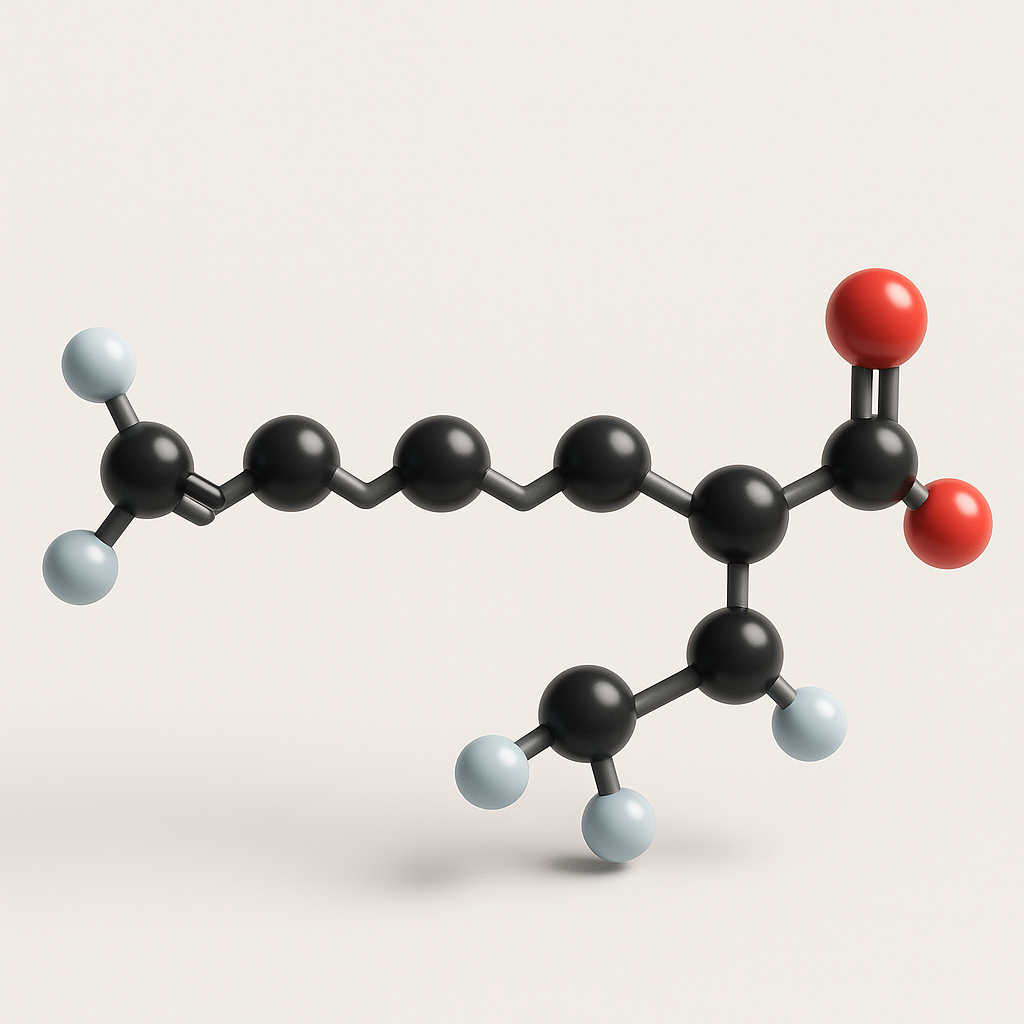
GLA (Gamma-Linolenic Acid)

GLA (Gamma-Linolenic Acid)
Gamma-Linolenic Acid (GLA) is a unique and biologically active omega-6 polyunsaturated fatty acid (PUFA). While most omega-6s are associated with pro-inflammatory pathways, GLA is notable for its potent anti-inflammatory effects. It is not abundant in the typical Western diet and must be obtained from specific plant-based sources. The most concentrated and commercially available sources are the seed oils of Evening Primrose (Oenothera biennis) and Borage (Borago officinalis), with borage oil generally containing a higher concentration of GLA [1, 2].
Although technically an omega-6 fatty acid, GLA behaves more like an omega-3 in the body, playing a crucial role in resolving inflammation and supporting cellular health.
Chemical Composition and Key Bioactive Roles
GLA is an 18-carbon fatty acid with three double bonds (18:3n-6). Its primary mechanism of action involves its conversion into Dihomo-gamma-linolenic acid (DGLA), which serves as a precursor to powerful anti-inflammatory and vasodilatory compounds.
| Role | Description |
|---|---|
| Precursor to Anti-Inflammatory Eicosanoids | Once consumed, GLA is converted into DGLA. DGLA is then metabolized into prostaglandin E1 (PGE1), a hormone-like substance that has strong anti-inflammatory, anti-thrombotic (prevents blood clots), and vasodilatory (widens blood vessels) properties. This pathway allows GLA to actively resolve inflammation, distinguishing it from other omega-6 fatty acids that can lead to pro-inflammatory compounds [2]. |
| Modulation of Immune and Inflammatory Responses | By promoting the production of anti-inflammatory compounds, GLA helps to balance the body’s immune response. This makes it a valuable therapeutic agent for chronic inflammatory conditions, where it can serve as a natural alternative or complement to nonsteroidal anti-inflammatory drugs (NSAIDs) [2]. |
| Nerve Health and Function | GLA is essential for the structure and function of nerve cell membranes. Deficiencies in GLA and its metabolites are linked to nerve damage, and supplementation can help restore nerve conduction velocity and improve symptoms of neuropathy by protecting nerve cells from damage [1]. |
Health Benefits
Clinical research has validated GLA’s effectiveness in several specific health conditions, particularly those driven by chronic inflammation or metabolic dysfunction.
- Rheumatoid Arthritis (RA): GLA is one of the most-studied supplements for RA. Multiple randomized, double-blind, placebo-controlled trials have demonstrated that GLA from borage or evening primrose oil can significantly reduce symptoms of RA, including joint pain, stiffness, and swelling. An 18-month clinical trial showed that borage oil was as effective as fish oil in reducing disease activity, and patients using it were able to reduce their reliance on conventional DMARD and TNF antagonist medications [3].
- Diabetic Neuropathy: There is strong evidence that GLA is effective for treating nerve pain associated with diabetes. Supplementation has been shown to improve nerve conduction and reduce symptoms like numbness, tingling, and burning, particularly in patients with well-controlled blood sugar levels [1].
- Skin Health (Eczema/Atopic Dermatitis): While some studies have been inconclusive, other research suggests GLA can improve skin health by regulating transepidermal water loss (TEWL), thereby preventing dryness and helping to manage conditions like eczema and xeroderma [2].
Evidence-Based Dosage
Dosage varies by condition, but clinical trials provide clear guidance.
- Diabetic Neuropathy: Doses of 320–480 mg of GLA per day have been used effectively in clinical trials lasting up to one year [1].
- Rheumatoid Arthritis: Higher doses are typically required for RA. Successful studies have used 1,400–2,800 mg (1.4–2.8 grams) of GLA per day [3]. This would equate to a significant amount of evening primrose or borage oil, so it is important to check the GLA concentration of the specific product.
Safety Profile
GLA is generally considered safe and well-tolerated, even at high doses for extended periods.
- Side Effects: The most common side effects are mild and gastrointestinal, including soft stools, diarrhea, belching, and gas [1].
- Important Warnings:
- Bleeding Disorders: GLA can slow blood clotting. Individuals with bleeding disorders or those taking anticoagulant medications (e.g., warfarin) should use GLA with caution as it may increase the risk of bruising and bleeding [1].
- Surgery: Due to its effect on blood clotting, it is recommended to stop taking GLA supplements at least 2 weeks before any scheduled surgery to reduce the risk of excess bleeding [1].
- Pregnancy: The safety of high-dose GLA supplements during pregnancy and breastfeeding has not been established, and it is best to avoid use without medical guidance [1].
Scientific References
- WebMD. (n.d.). GAMMA-LINOLENIC ACID (GLA): Overview, Uses, Side Effects, Precautions, Interactions, Dosing and Reviews. Retrieved from https://www.webmd.com/vitamins/ai/ingredientmono-805/gamma-linolenic-acid-gla
- Latifi, M., et al. (2025). Recent advances and future directions on GLA-producing organisms. Frontiers in Bioengineering and Biotechnology, 13, 1567840. https://pmc.ncbi.nlm.nih.gov/articles/PMC12283596/
- Reed, G. W., et al. (2014). Treatment of Rheumatoid Arthritis with Marine and Botanical Oils: An 18-Month, Randomized, and Double-Blind Trial. Evidence-Based Complementary and Alternative Medicine, 2014, 857456. https://pmc.ncbi.nlm.nih.gov/articles/PMC3977504/