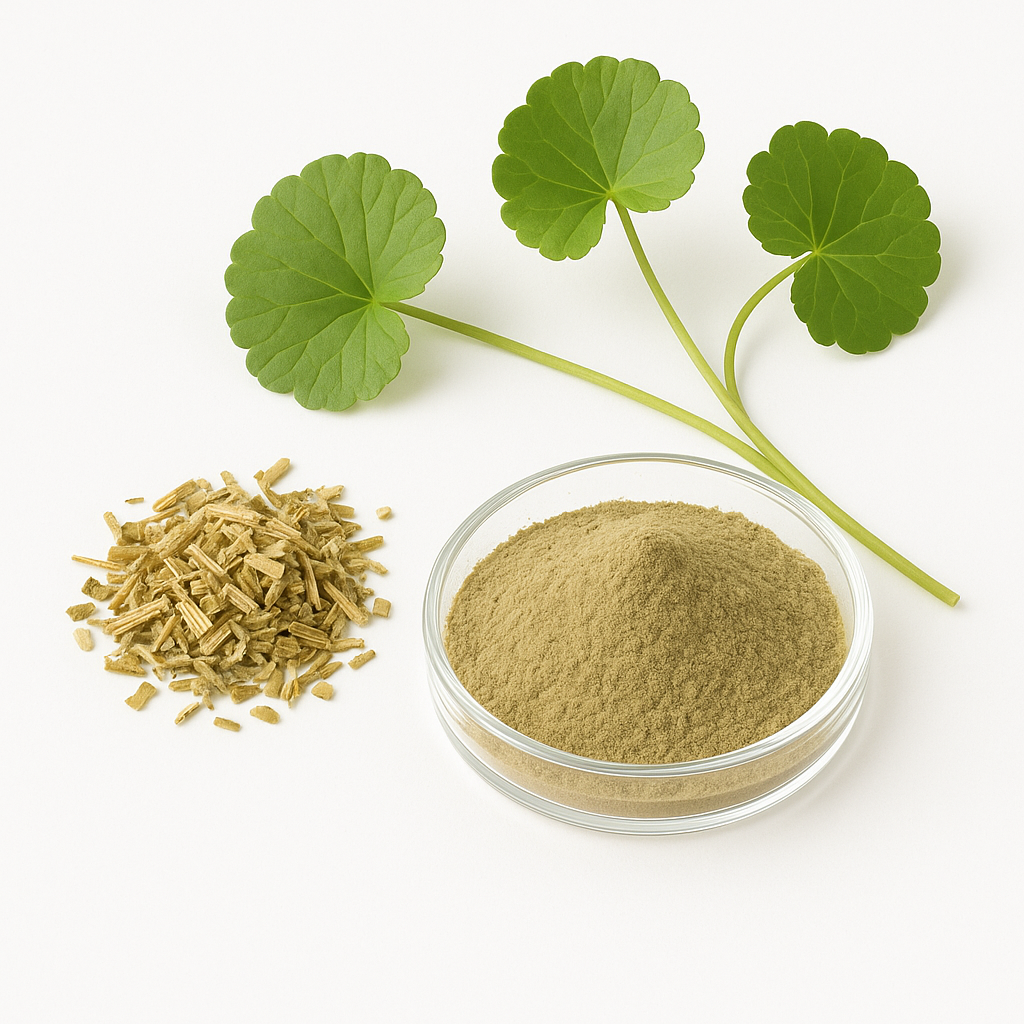
Kava (Piper methysticum)
Kava (Piper methysticum) is a perennial shrub belonging to the pepper family, native to the islands of the South Pacific. The roots and rhizomes of the plant have been traditionally used for centuries to prepare a ceremonial and social beverage with sedative and anxiolytic (anti-anxiety) properties. The name Piper methysticum literally means “intoxicating pepper” [1].
Mechanism of Action
The primary pharmacological effects of Kava are attributed to a class of compounds called kavalactones. While the exact mechanism is complex and multi-faceted, the main actions include:
- GABA Modulation: Kavalactones, particularly kavain, are thought to modulate the activity of gamma-aminobutyric acid (GABA) receptors, which are the primary inhibitory neurotransmitters in the central nervous system. This leads to the anxiolytic and sedative effects [1, 2].
- Sodium Channel Blockade: Kavalactones can inhibit voltage-gated sodium channels, which contributes to the local anesthetic and antiepileptic properties [3].
- Monoamine Modulation: Other proposed mechanisms include the inhibition of monoamine oxidase B (MAO-B) and the inhibition of noradrenaline and dopamine re-uptake, influencing mood and anxiety [1].
2. Chemical Composition/Key Bioactive Roles
The therapeutic and psychoactive properties of Kava are primarily due to the kavalactones, which constitute 3–20% of the dried root by weight. There are 18 distinct kavalactones identified, but six major ones account for approximately 95% of the lipophilic extract [4].
| Active Compound | Type | Key Bioactive Roles |
|---|---|---|
| Kavain | Kavalactone | Major anxiolytic and psychoactive component, GABA-modulating effects [2] |
| Dihydrokavain | Kavalactone | Sedative and hypnotic effects, potentially more potent than kavain [4] |
| Methysticin | Kavalactone | Anxiolytic and muscle-relaxant properties, MAO-B inhibition [1] |
| Dihydromethysticin | Kavalactone | Sedative and hypnotic effects, local anesthetic properties [4] |
| Yangonin | Kavalactone | Binds to cannabinoid receptors (CB1), contributing to psychoactive effects [4] |
| Desmethoxyyangonin | Kavalactone | MAO-B inhibition, contributing to mood effects [1] |
3. Health Benefits
Kava has been extensively studied for its anxiolytic effects, with strong scientific evidence supporting its use for anxiety disorders.
Generalized Anxiety Disorder (GAD)
Numerous clinical trials, including randomized, placebo-controlled studies, support the efficacy of Kava extracts in treating symptoms of anxiety, particularly GAD.
- A comprehensive review and meta-analysis concluded that the weight of evidence supports the use of Kava in the treatment of anxiety, showing a significant result in the majority of reviewed studies [1].
- A double-blind, placebo-controlled study demonstrated that a standardized Kava extract significantly reduced anxiety symptoms (measured by the Hamilton Anxiety Rating Scale – HARS) compared to placebo in patients with GAD [5].
- The anxiolytic effect is generally observed without significant impairment of cognitive function or alertness at therapeutic doses, unlike many pharmaceutical anti-anxiety medications [1].
Sleep Improvement
Due to its sedative and muscle-relaxant properties, Kava is also used to improve sleep quality, particularly in individuals whose insomnia is linked to anxiety. Kavalactones like Dihydrokavain and Dihydromethysticin contribute to this effect [4].
4. Dosage and Usage
Kava is typically consumed as a water-based infusion (traditional preparation) or as a standardized extract in capsule or tablet form. Dosage is standardized based on the total amount of kavalactones.
Recommended Dosages
Clinical trials have established a therapeutic window for Kava extracts:
- Standardized Kavalactone Dose: Effective doses used in clinical studies for anxiety range from 60 mg to 280 mg of kavalactones per day, administered in divided doses [6].
- Maximum Daily Dose: A maximum daily dose of 250 mg of kavalactones is often suggested to avoid potential hepatotoxicity, although some studies have used higher doses [7].
- Traditional Use: Traditionally, a water suspension of the pounded root is consumed. The kavalactone content in a traditional beverage is highly variable.
Food Sources
Kava is not a food source and is consumed exclusively as a beverage or supplement prepared from the root and rhizome of the Piper methysticum plant.
5. Safety and Precautions
WARNING: Kava use has been associated with a risk of severe liver damage (hepatotoxicity), which can be fatal. Consult a healthcare professional before use.
Side Effects
Common side effects are generally mild and may include [1]:
- Digestive upset
- Headache
- Dizziness
- Fatigue or drowsiness
- Kava Dermopathy: Long-term, heavy use (especially of non-standardized preparations) can cause a reversible, scaly skin rash.
Contraindications
Kava should be avoided by individuals with:
- Pre-existing liver disease or a history of liver problems.
- Depression (Kava may worsen symptoms in some individuals).
- Pregnancy and Breastfeeding (Safety has not been established).
- Children (Use is not recommended due to lack of safety data).
Drug Interactions
Kava can interact with numerous medications due to its effects on the central nervous system and liver enzyme pathways:
- Alcohol: Concurrent use is strictly contraindicated as it significantly increases the risk of liver damage and enhances sedative effects [1].
- CNS Depressants: Kava potentiates the effects of sedatives, anxiolytics (e.g., benzodiazepines), hypnotics, and antipsychotics, leading to excessive drowsiness and impaired motor skills [1].
- Hepatotoxic Drugs: Kava may increase the risk of liver damage when taken with other medications known to be toxic to the liver.
- CYP450 Substrates: Kava can inhibit or induce certain cytochrome P450 enzymes (e.g., CYP2D6, CYP3A4), potentially altering the metabolism and efficacy of a wide range of drugs [3].