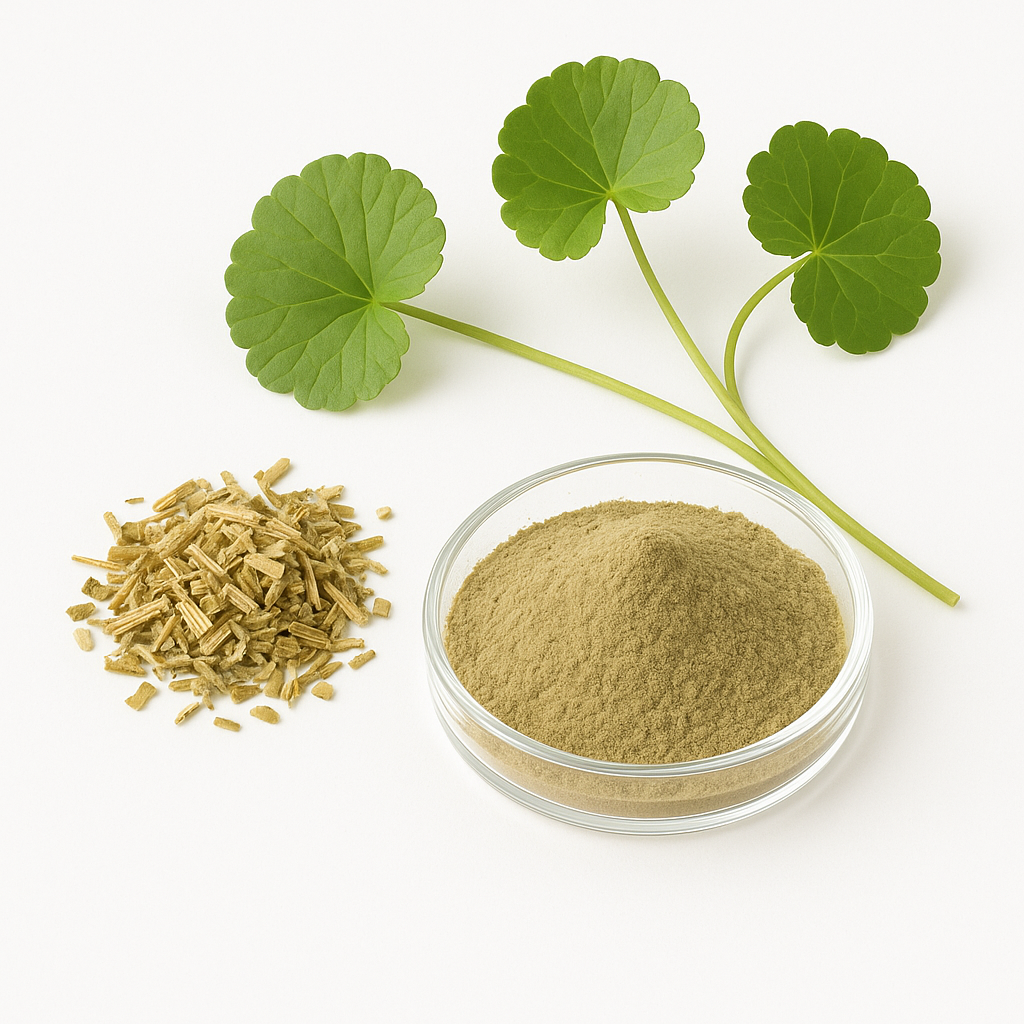
MSM (Methylsulfonylmethane)
Methylsulfonylmethane (MSM), also known as dimethyl sulfone, methyl sulfone, or sulfonylbismethane, is a naturally occurring organosulfur compound that has gained significant popularity as a dietary supplement. It is a metabolite of dimethyl sulfoxide (DMSO) and is a component of the Earth’s natural sulfur cycle [1].
MSM is found in small amounts in various foods, including fruits, vegetables, grains, coffee, tea, and cow’s milk [1]. However, the concentration in food sources is typically in the parts per million (ppm) range, making supplementation the primary route for ingesting bioactive quantities [1].
Mechanism of Action
The full mechanistic function of MSM is complex, but research suggests it operates primarily through two key pathways: anti-inflammation and antioxidant activity [1].
- Anti-inflammatory Effects: MSM has been shown to inhibit the transcriptional activity of Nuclear Factor kappa-light-chain-enhancer of activated B cells (NF-κB), a protein complex that controls DNA transcription and is central to inflammatory responses. By impeding NF-κB, MSM downregulates the production of pro-inflammatory cytokines such as Interleukin (IL)-1, IL-6, and Tumor Necrosis Factor-alpha (TNF-α) [1]. It also suppresses the expression of enzymes like inducible nitric oxide synthase (iNOS) and cyclooxygenase-2 (COX-2), thereby lessening the production of vasodilating and pro-inflammatory agents [1].
- Antioxidant Effects: MSM exerts its antioxidant properties not by directly neutralizing reactive oxygen species (ROS) but by suppressing their mitochondrial generation. It also influences the activation of key transcription factors like Nuclear factor (erythroid-derived 2)-like 2 (Nrf2), which is crucial for upregulating the body’s natural antioxidant enzymes, including glutathione peroxidase (GPx), superoxide dismutases (SODs), and catalase (CAT) [1].
2. Chemical Composition/Key Bioactive Roles
MSM is a simple molecule with the chemical formula $text{C}_2text{H}_6text{O}_2text{S}$. Its primary bioactive role is related to its sulfur content and its ability to modulate inflammatory and oxidative pathways.
| Compound | Chemical Role | Bioactive Role |
|---|---|---|
| Methylsulfonylmethane (MSM) | Organosulfur Compound | Anti-inflammatory agent, Antioxidant modulator, Sulfur donor [1] |
| Sulfur | Essential Mineral | Component of amino acids (methionine, cysteine), vitamins (biotin, thiamine), and connective tissues (keratin, collagen) [1] |
3. Health Benefits
MSM has been investigated for its therapeutic potential in a variety of conditions, with the strongest evidence supporting its use for joint health and inflammation.
Osteoarthritis and Joint Pain
Clinical trials have demonstrated MSM’s efficacy in improving symptoms associated with osteoarthritis (OA), particularly in the knee.
- A randomized controlled study showed that MSM supplementation significantly improved pain and physical function in patients with knee OA [2].
- In a pilot clinical trial, patients with knee OA taking 3 grams of MSM twice a day (6 grams total daily) experienced a significant reduction in pain and physical function difficulty without major adverse events [3].
- MSM is often used in combination with other joint supplements like glucosamine and chondroitin sulfate, with combination therapies reporting significant improvements in pain, stiffness, and overall physical function [4].
Muscle Soreness and Recovery
MSM supplementation can aid in recovery from strenuous exercise by reducing muscle damage and oxidative stress.
- Pre-treatment with MSM has been shown to reduce muscle soreness following both strenuous resistance exercises and endurance exercise [5, 6].
- Studies show that MSM can acutely attenuate exercise-induced protein oxidation and lipid peroxidation, while also increasing total antioxidant capacity [7].
Seasonal Allergic Rhinitis (SAR)
MSM may help alleviate the symptoms of seasonal allergies due to its anti-inflammatory properties.
- A multicentered, open-label trial found that a dosage of 2.6 grams of MSM per day for 30 days improved both upper and total respiratory symptoms, as well as lower respiratory symptoms, by the third week of supplementation [8].
Skin Quality and Texture
MSM has been suggested to improve skin health, potentially by acting as a sulfur donor for keratin.
- Human studies have shown that MSM treatment can significantly improve skin appearance and condition, as assessed by expert grading and participant self-assessment [9].
- Combination therapies including MSM have also been used to improve pigmentation, skin elasticity, and the degree of wrinkling [10].
4. Dosage and Usage
Recommended Dosages
MSM is generally well-tolerated at a wide range of dosages.
- Osteoarthritis: Common effective dosages in clinical trials range from 3 grams to 6 grams per day, often split into two doses (e.g., 3g twice daily) [3, 4].
- Seasonal Allergies: A dosage of 2.6 grams per day has been shown to be effective [8].
- General Use: As a Generally Recognized As Safe (GRAS) approved substance, MSM is well-tolerated by most individuals at dosages of up to 4 grams daily [1].
Food Sources
While MSM is naturally present in various foods, the concentrations are very low (hundredths of ppm), making it impractical to achieve therapeutic dosages through diet alone. Natural sources include:
- Fruits
- Vegetables
- Grains
- Coffee and Tea
- Cow’s Milk [1]
5. Safety and Precautions
MSM is considered safe and well-tolerated for most individuals when taken at recommended dosages.
Side Effects
Reported side effects are generally mild and uncommon, and may include:
- Gastrointestinal upset (nausea, diarrhea, bloating)
- Headache
- Fatigue
- Insomnia [1, 11]
Contraindications
There are no major contraindications for MSM use, but caution is advised in certain populations:
- Pregnancy and Breastfeeding: While MSM is considered likely safe during pregnancy based on animal studies, there is insufficient reliable information to know if it is safe to use when breastfeeding. Consultation with a healthcare provider is recommended [12].
- Allergies: Individuals with known allergies to sulfur-containing compounds should exercise caution, although MSM is an organosulfur compound and not a sulfite or sulfate.
Drug Interactions
MSM is not known to have any serious drug interactions. However, due to its potential to influence inflammation and blood flow, individuals taking the following should consult a healthcare professional:
- Blood Thinners (Anticoagulants/Antiplatelets): MSM’s potential to act as a blood diluent (as claimed in early patents) suggests a theoretical risk of increased bleeding, though this is not strongly supported by clinical evidence [1].
Warnings
- Serious Warning: MSM is not a substitute for prescribed medical treatment. Individuals with severe or chronic conditions such as arthritis should use MSM as a complementary therapy under the guidance of a healthcare professional.
- Quality Control: Due to the lack of strict regulation for dietary supplements, it is important to choose high-quality products, such as those that have been granted GRAS status by the FDA (e.g., OptiMSM®) [1].
6. References
- Butawan, M., Benjamin, R. L., & Bloomer, R. J. (2017). Methylsulfonylmethane: Applications and Safety of a Novel Dietary Supplement. Nutrients, 9(3), 290. [URL: https://doi.org/10.3390/nu9030290]
- Debbi, E. M., Agar, G., Fichman, G., Ziv, Y. B., Kardosh, R., Halperin, N., Elbaz, A., Beer, Y., & Debi, R. (2011). Efficacy of methylsulfonylmethane supplementation on osteoarthritis of the knee: A randomized controlled study. BMC Complementary and Alternative Medicine, 11, 50. [URL: https://doi.org/10.1186/1472-6882-11-50]
- Kim, L. S., Axelrod, L. J., Howard, P., Buratovich, N., & Waters, R. F. (2006). Efficacy of methylsulfonylmethane (MSM) in osteoarthritis pain of the knee: a pilot clinical trial. Osteoarthritis and Cartilage, 14(3), 286–294. [URL: https://doi.org/10.1016/j.joca.2005.10.003]
- Usha, P. R., & Naidu, M. U. (2004). Randomised, Double-Blind, Parallel, Placebo-Controlled Study of Glucosamine, Glucosamine Plus MSM, and Glucosamine Plus N-Acetyl-D-Glucosamine in the Treatment of Knee Osteoarthritis. Clinical Drug Investigation, 24(6), 353–363. [URL: https://doi.org/10.2165/00044014-200424060-00003]
- Barmaki, S., Bohlooli, S., Khoshkhahesh, B., & Nakhostin-Roohi, B. (2012). Effect of methylsulfonylmethane supplementation on exercise-induced muscle damage and total antioxidant capacity. The Journal of Sports Medicine and Physical Fitness, 52(2), 170–174. [URL: https://pubmed.ncbi.nlm.nih.gov/22525653/]
- Van der Merwe, M., & Bloomer, R. J. (2016). The influence of methylsulfonylmethane on inflammation-associated cytokine release before and following strenuous exercise. Journal of Sports Medicine, 2016, 7498359. [URL: https://doi.org/10.1155/2016/7498359]
- Nakhostin-Roohi, B., Barmaki, S., Khoshkhahesh, F., & Bohlooli, S. (2011). Effect of chronic supplementation with methylsulfonylmethane on oxidative stress following acute exhaustive exercise. Applied Physiology, Nutrition, and Metabolism, 36(6), 903–907. [URL: https://doi.org/10.1139/h11-137]
- Barrager, E., Veltmann, J. R., Schauss, A. G., & Schiller, R. N. (2002). A multicentered, open-label trial on the safety and efficacy of methylsulfonylmethane in the treatment of seasonal allergic rhinitis. Journal of Alternative and Complementary Medicine, 8(2), 167–173. [URL: https://doi.org/10.1089/107555302317371451]
- Muizzuddin, N., Benjamin, R., & Maher, I. (2020). A novel intervention to enhance skin condition in a randomized controlled trial: oral methylsulfonylmethane (MSM) supplementation. International Journal for Vitamin and Nutrition Research, 90(3-4), 211–222. [URL: https://doi.org/10.1024/0300-9831/a000571]
- Berardesca, E., Cameli, N., Primavera, G., & Carrera, M. (2008). Clinical and instrumental evaluation of the effects of a new topical synergetic combination of silymarin, methylsulfonylmethane and hyaluronic acid in the treatment of rosacea. Journal of Cosmetic Dermatology, 7(1), 8–14. [URL: https://doi.org/10.1111/j.1473-2165.2008.00361.x]
- WebMD. Methylsulfonylmethane (MSM): Uses, Side Effects, and More. Retrieved from [URL: https://www.webmd.com/vitamins/ai/ingredientmono-522/methylsulfonylmethane-msm]
- Examine.com. MSM benefits, dosage, and side effects. Retrieved from [URL: https://examine.com/supplements/msm/]